
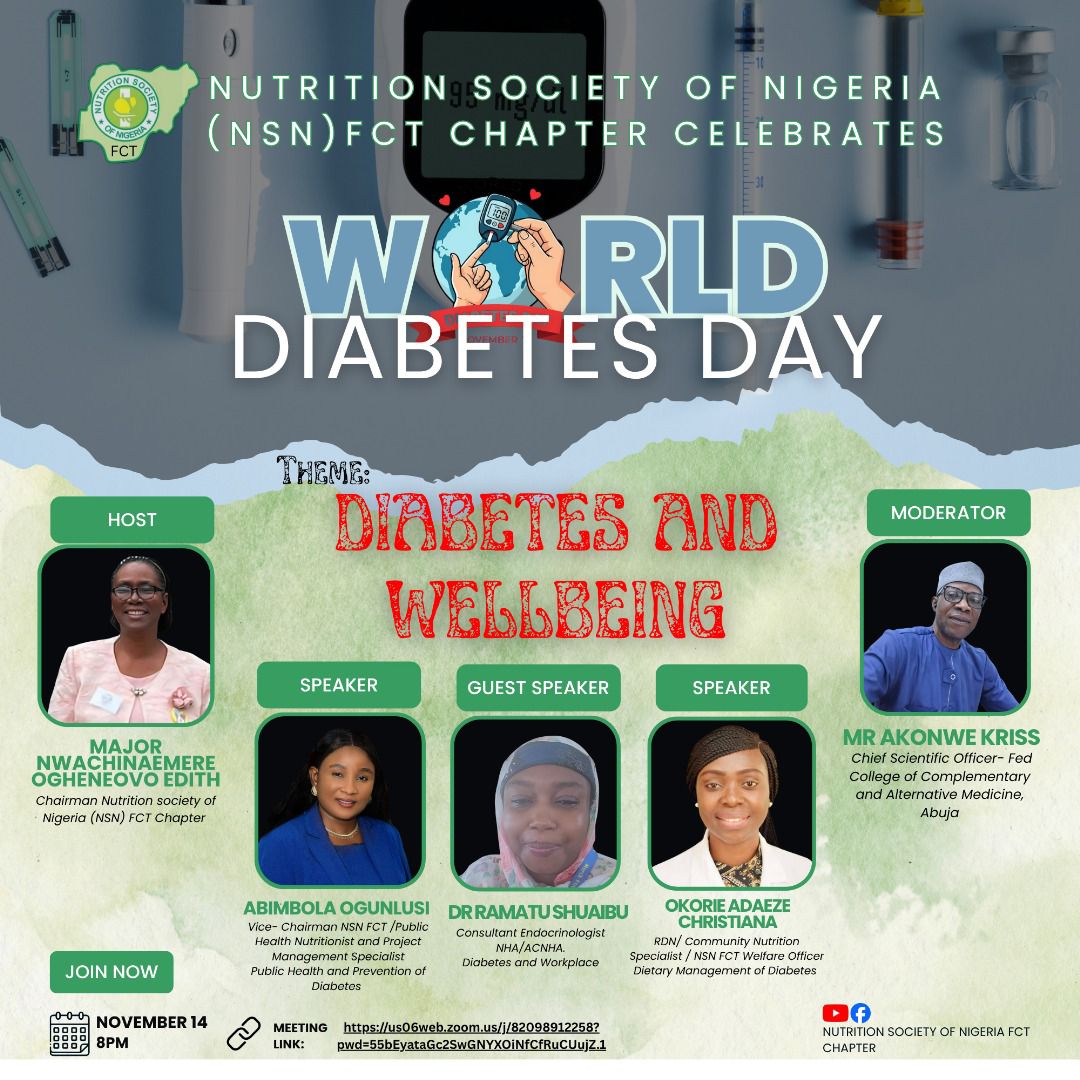
The Nutrition Society of Nigeria (NSN), FCT Chapter, joined the global community in commemorating World Diabetes Day 2025 by hosting a highly informative virtual webinar on November 14th. This year’s theme, “Diabetes and Well-being,” with a special focus on “Diabetes and the Workplace,” underscored the importance of creating supportive environments for individuals living with diabetes.
The session was hosted by Major Nwachinaemere Ogheneovo Edith, Chairman of the NSN FCT Chapter, who emphasized the urgent need for increased public awareness and stronger workplace policies that protect and empower people living with diabetes. She highlighted the rising prevalence of diabetes in Nigeria and reinforced the role of nutrition professionals in prevention and management.
The event was moderated by Mr. Akonwe Kriss, Chief Scientific Officer at the Federal College of Complementary and Alternative Medicine, Abuja. He provided structure to the discussions and ensured a seamless flow throughout the program.
The webinar featured three expert speakers who delivered comprehensive and practical insights:
- Abimbola Ogunlusi
Vice-Chairman, NSN FCT; Public Health Nutritionist
She discussed the public health implications of diabetes, stressing the importance of lifestyle modification, early detection, and community-based interventions. Her presentation highlighted how nutrition education and workplace wellness programs can significantly reduce the risk of diabetes. - Dr. Ramat Mushaiubu
Consultant Endocrinologist
As the guest speaker, she provided a detailed analysis of diabetes in the workplace, addressing common challenges such as stigma, lack of support, and insufficient knowledge among employers. She advocated for workplace policies that include flexible schedules, designated meal times, and access to medical care, enabling employees with diabetes to maintain productivity without compromising their health. - Okorie Adaeze Christiana
Registered Dietitian Nutritionist
She spoke on dietary management, offering evidence-based guidance on meal planning, glycemic control, and culturally appropriate diet options. Her session reinforced nutrition as a cornerstone of diabetes prevention and long-term management.
The webinar concluded with a strong call to action for organizations, policymakers, and community leaders to prioritize supportive systems for individuals living with diabetes. Participants were encouraged to serve as advocates for improved health literacy, early screening, and inclusive workplace practices.